Production country
Türkiye
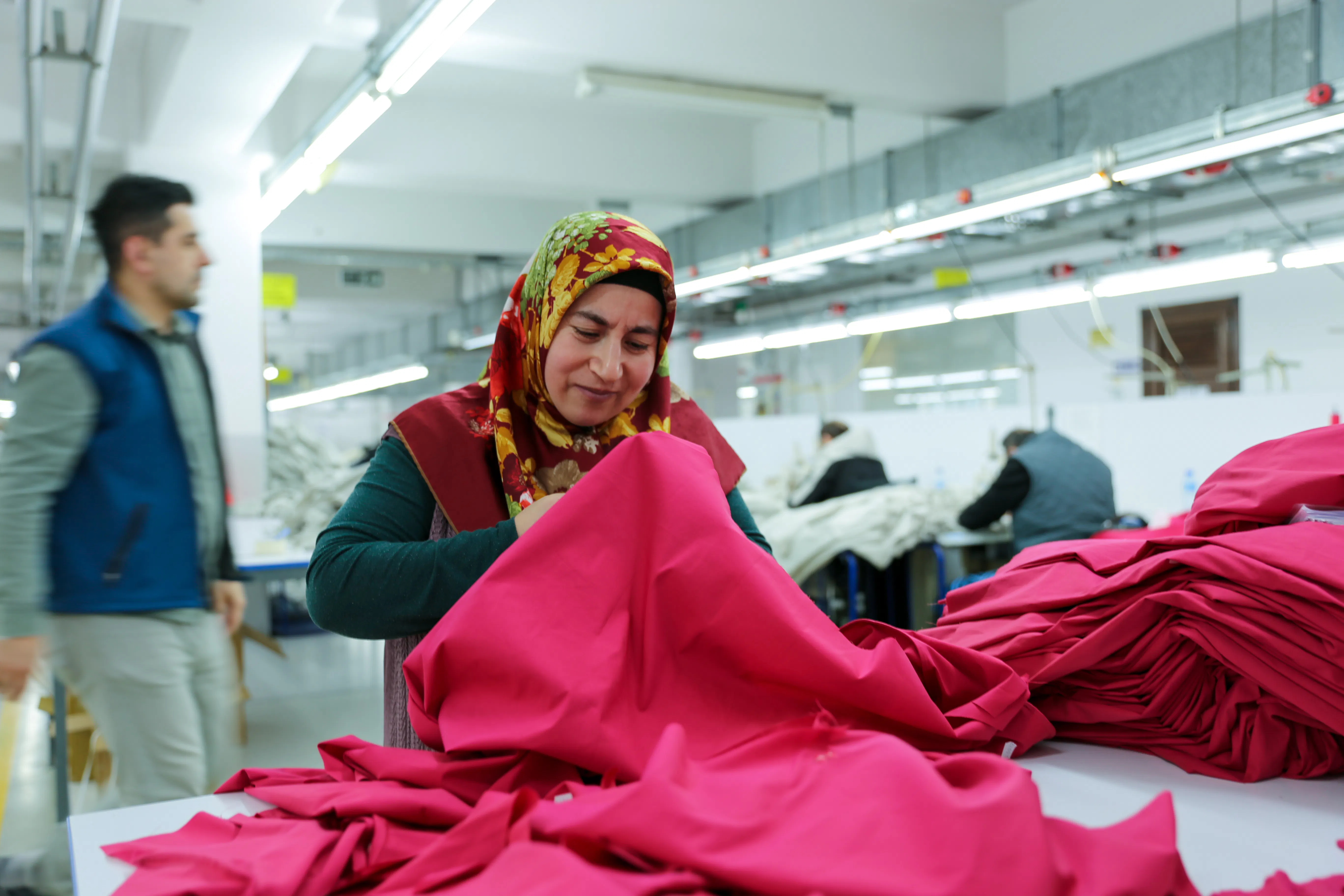
Türkiye is a major garment exporter with a large, integrated textile sector dominated by SMEs and a predominantly female workforce. Fragmentation and unauthorised subcontracting reduce transparency and weaken social protections. A shift towards supporting companies with EU legislative requirements have led to overall due diligence improvements, yet risks persist.
Türkiye ranks as the world’s sixth-largest ready-to-wear garment exporter and the third-largest clothing supplier to the European Union. The country's fully integrated production chain generates a $77.2 billion annual market value. Women make up the majority of the workforce. The Turkish garment and textile sector is charecterised by extreme fragmentation, with small and medium enterprises (SMEs) being most dominant. This fragmentation can lead to reduced transparency and weakened implementation of labour protections. Pressures from the EU Green Deal and European buyers have shifted local factories toward water-saving technologies, business practices that support European legislation, such as strict ESG metrics. But widespread unauthorised subcontracting remains common and freedom of association is still under pressure. And local hyperinflation creates a high risk of wages dropping below a realistic living wage, despite ffrequent national minimum wage increases.
The third-largest garment supplier to the EU
Over 257,000 garment workers
181
Factories Fair Wear members source from
36
Fair Wear member brands sourcing from the country
What Fair Wear is doing
How we work locally with partners to address risks and improve working conditions.
Due diligence requires companies to know what is happening in their supply chain. Fair Wear has state of the art risk tools that support brands with identifying and tracking their most urgent risks. In Türkiye, the local team offers extensive risk identification and validation services based on Fair Wear methodologies. Companies can access detailed, stakeholder-validated country risk information and request Fair Wear's Onsite Assessments (Full, Modular and Validation). Companies can also request custom HREDD facilitation support, such as verification activities.
Insight only creates change when you act on it. Fair Wear equips brands with a set of established training modules to raise awareness, address root causes and implement mechanisms for prevention, mitigation and remediation. In Türkiye, companies can request the Fair Wear Onboarding Training for suppliers and workers, which focuses on awareness-raising on workers' rights and support for social dialogue between workers and management. The Fair Wear Fair Price support visit offers hands-on support with implementation of the Fair Price app, a practical tool for estimating labour costs and building fact-based pricing conversations with suppliers. Moreover, companies can request custom HREDD-related training.
Staying ahead of risks means knowing about them before they escalate. Fair Wear's grievance mechanism is available in Turkish, ensuring workers can raise concerns in their own language. The mechanism provides an accessible, confidential channel, with findings feeding into Fair Wear's work with brands and suppliers to address root causes.
Fair Wear brings the right people to the table in Türkiye through our extensive stakeholder network. We collaborate with local government and organisations such as TÜRK-İŞ, HAK-İŞ, and DİSK, bringing together industry and worker representation to advance policy alignment, working conditions and strengthen social dialogue across the sector.
Related stories
Explore news and stories on our in-country work