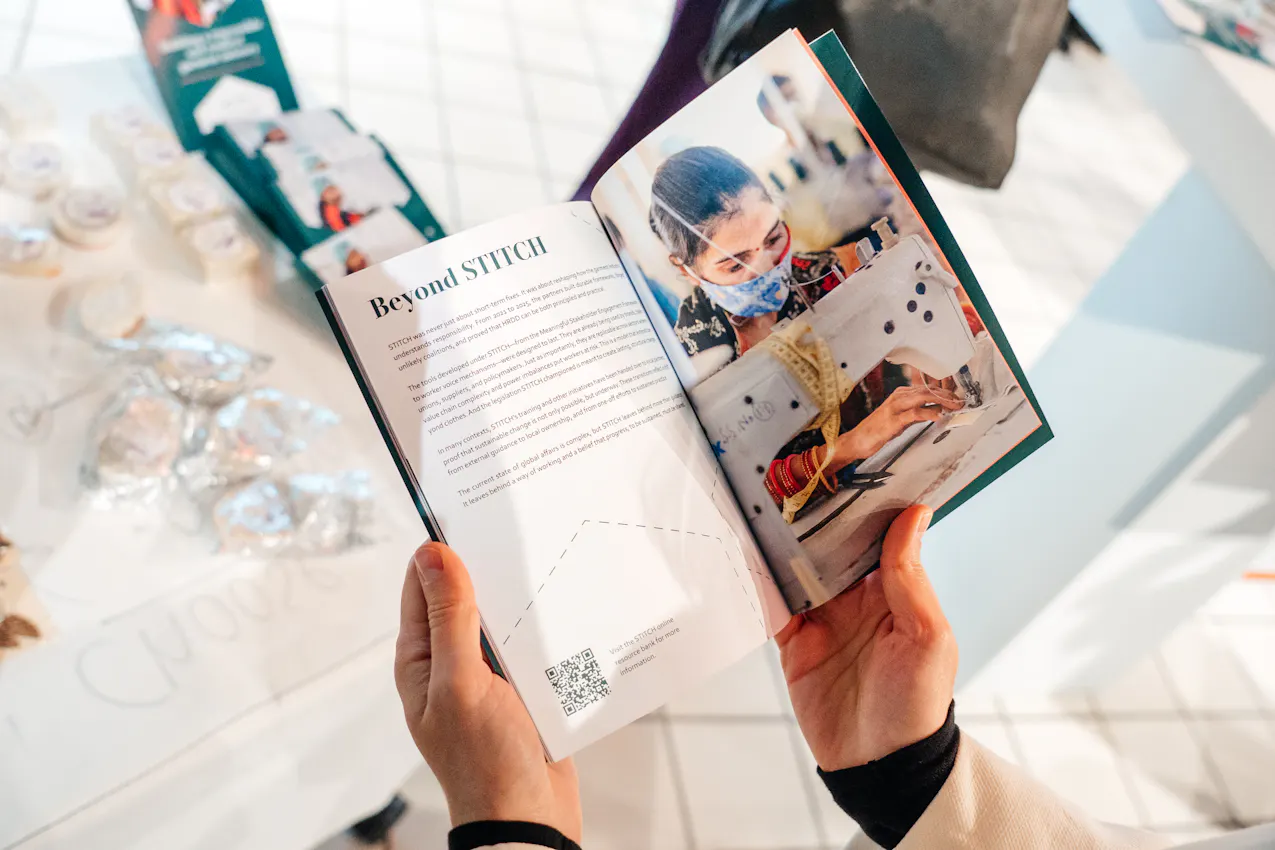
After five years of collaboration, the STITCH Partnership has come to a close. The consortium, bringing together CDI Viet Nam, Cividep India, CNV Internationaal, ETI UK, Mondiaal FNV and Fair Wear, was united by a shared vision: a global textile and garment industry that contributes to a more equal and just society by respecting human rights in the world of work. As the programme concludes, it offers important lessons not only on what has been achieved, but on how collaborative, evidence-based approaches can deliver lasting improvements for workers and more resilient supply chains in the years ahead.
In a highly fragmented industry, STITCH reaffirmed a core insight: meaningful, industry-wide change is only possible when organisations align their efforts to collectively advance shared standards and tested approaches across the supply chain. From the outset, the partnership was designed to move beyond isolated interventions and instead strengthen the conditions for systemic change by informing effective legal frameworks, validating what works in practice, and ensuring that workers’ voices inform decision-making at brand level.
Over the past five years, STITCH partners worked together to advance human rights by developing and testing tools, frameworks, and guidance aligned with the OECD’s six-step human rights due diligence cycle. As lead partner of the consortium, Fair Wear played a central role in advancing work on meaningful stakeholder engagement, equitable sourcing with a focus on responsible purchasing practices and gender-responsiveness. This practical focus helped stakeholders move beyond theory toward clear practices that help improve in working conditions.
Alongside implementation work, STITCH partners engaged in joint advocacy at EU level and in countries such as Germany and the Netherlands. By involving brands and insights from worker representatives and civil society organisations, the partnership ensured that policy dialogue reflected the realities in production countries. This practical, field-based knowledge informed discussions with policymakers on responsible business conduct, reinforcing the importance of legislation that aligns with the needs of workers and with how due diligence works in practice.
A key outcome of STITCH was the testing and further development of Fair Wear’s HRDD Facilitation Hub. The Hub demonstrates how stakeholder-validated information, especially from workers and local organisations, can inform better business decisions. By connecting tools such as CDI’s WeCheck App, CNV Internationaal’s Fair Work Monitor, and research by Cividep India, the Hub helps ensure that worker-driven data reaches brands in a form they can act on, strengthening accountability and enabling companies to target their resources where they have the greatest impact. In the years ahead, Fair Wear will continue expanding the use of the Hub so that a broader part of the industry can benefit, both in production countries and at brand level.
Standardising expectations and approaches is essential for systemic change. Under STITCH, partners jointly developed and aligned tools with other influential actors across the supply chain. A key example is the Common Framework for Responsible Purchasing Practices (CFRPP), which sets out what responsible purchasing means and how it can be implemented in practice. Today, the CFRPP is referenced by other multi-stakeholder initiatives, integrated into partner organisations’ approaches, and recognised by investors, helping reduce fragmentation and increase consistency across the industry. Accompanying resources, including a Responsible Purchasing Practices Resources Hub and the Purchasing Practices HRDD Framework for accountability bodies, further support uptake and accountability.
Another major achievement of STITCH was the development of a sector-agnostic Meaningful Stakeholder Engagement Framework, alongside garment-industry-specific Technical Guidance for brands. By bringing together labour rights organisations, trade unions, and multi-stakeholder initiatives, the partnership integrated diverse perspectives into a comprehensive framework that reflects the realities of workers, suppliers, and brands alike. Fair Wear now bases its stakeholder engagement efforts in production countries on this shared framework, strengthening the quality and credibility of engagement across contexts.
While the formal STITCH partnership with CDI, Cividep India, CNV Internationaal, ETI, and Mondiaal FNV comes to an end, this moment also marks the beginning of the next phase for systemic change: Fair Wear will continue working with partners and stakeholders to build responsible and resilient supply chains where workers' rights are realised and responsibility is shared across the supply chain. The foundations laid through STITCH will continue to inform Fair Wear’s work in the years ahead, demonstrating how collaboration, evidence, and worker-centred approaches can deliver lasting impact.