📋 Datos del documento (click para expandir)
{
"id": "ad0wOhAAACYAL_5x",
"uid": "gender-responsiveness",
"url": null,
"type": "impact_area",
"href": "https://fair-wear.cdn.prismic.io/api/v2/documents/search?ref=aqlJFxIAAC4AOzGu&q=%5B%5B%3Ad+%3D+at%28document.id%2C+%22ad0wOhAAACYAL_5x%22%29+%5D%5D",
"tags": [
"Gender responsiveness"
],
"first_publication_date": "2026-04-13T18:05:03+0000",
"last_publication_date": "2026-07-28T21:04:05+0000",
"slugs": [
"gender-responsiveness"
],
"linked_documents": [],
"lang": "en-us",
"alternate_languages": [],
"data": {
"hero_label": "Impact areas",
"hero_logo": {
"dimensions": {
"width": 1136,
"height": 1136
},
"alt": null,
"copyright": null,
"url": "https://images.prismic.io/fair-wear/ONrvFbVv1exCGLbH_gender-responsiveness.png?auto=format,compress",
"id": "ONrvFbVv1exCGLbH",
"edit": {
"x": 0,
"y": 0,
"zoom": 1,
"background": "transparent"
}
},
"hero_title": [
{
"type": "heading1",
"text": "Gender responsiveness",
"spans": [],
"direction": "ltr"
}
],
"hero_description": [
{
"type": "paragraph",
"text": "Putting gender at the heart of human rights due diligence",
"spans": [],
"direction": "ltr"
}
],
"hero_image": {
"dimensions": {
"width": 5472,
"height": 3648
},
"alt": null,
"copyright": null,
"url": "https://images.prismic.io/fair-wear/acBFNsufXZgZbrxH_Gender.jpg?auto=format,compress",
"id": "acBFNsufXZgZbrxH",
"edit": {
"x": 0,
"y": 0,
"zoom": 1,
"background": "transparent"
}
},
"intro_body": [
{
"type": "paragraph",
"text": "The garment industry is built on women's labour, yet women workers are disproportionately concentrated in low-paid, low-power roles, and face distinct risks including gender-based violence and harassment, unequal pay, and limited access to leadership. Gender-responsive human rights due diligence (GRHRDD) recognises that human rights violations are not gender neutral: gender is a cross-cutting dimension intrinsic to all labour risks. ",
"spans": [],
"direction": "ltr"
},
{
"type": "paragraph",
"text": "Fair Wear supports brands to apply a gender lens across every step of their due diligence — identifying gendered risks, ensuring women and gender-diverse workers can participate safely and meaningfully, and using gender data, including sex-disaggregated data, to set priorities and track impact. ",
"spans": [],
"direction": "ltr"
}
],
"intro_stats": [
{
"stat_value": "12,000+",
"stat_label": "representatives of factories trained on gender-related topics"
},
{
"stat_value": "77%",
"stat_label": "members have collected gender data for most of their factories"
},
{
"stat_value": "51%",
"stat_label": "members include a gender lens in action plans"
}
],
"show_why_section": true,
"why_label": "Why it matters",
"why_title": [
{
"type": "heading2",
"text": "The problems we're addressing",
"spans": [],
"direction": "ltr"
}
],
"why_description": [
{
"type": "paragraph",
"text": "The garment industry offers economic opportunity — often providing first-generation formal employment for women. But structural power imbalances mean those opportunities rarely translate into equal treatment, safety or advancement. ",
"spans": [],
"direction": "ltr"
}
],
"why_items": [
{
"item_title": "Tackling the concentration of women in low-paid, low-power roles.",
"item_description": [
{
"type": "paragraph",
"text": "70–85% of garment workers are women, yet factory ownership, management and supervisory roles remain overwhelmingly male. Men's roles are systematically valued and paid more, and women are rarely granted opportunities for promotion. Fair Wear supports brands in identifying and addressing gendered pay and power imbalances through tools such as the Living Wage Modular Assessment, the LMS Module Reduce the Gender Pay Gap, and GRHRDD guidance on the Member Hub. Through our workplace programmes, grievance mechanisms and supplier engagement, we help strengthen women workers’ voice, improve access to promotion and leadership opportunities, and connect gender equality to wider work on wages, excessive overtime, violence and harassment, and responsible purchasing practices. ",
"spans": [],
"direction": "ltr"
}
]
},
{
"item_title": "Addressing gender-based violence and harassment.",
"item_description": [
{
"type": "paragraph",
"text": "Violence and harassment are widespread in garment factories. In Bangladesh, 60% of female workers reported being intimidated or threatened with violence, and 75% of workers in India and Bangladesh reported regular verbal abuse. Fair Wear applies a survivor-centred approach to grievance handling — ensuring women can safely report concerns and access redress, with protections against retaliation and re-traumatisation. ",
"spans": [],
"direction": "ltr"
}
]
},
{
"item_title": "Closing gaps in rights awareness and access.",
"item_description": [
{
"type": "paragraph",
"text": "For example, in Bangladesh, only 5% of garment workers were aware of their maternity entitlements. Women workers also face disproportionate burdens outside the workplace, including unpaid care responsibilities that compound workplace disadvantage. We support brands to conduct targeted awareness-raising to reach women, migrant workers and others facing greater barriers to accessing their rights.",
"spans": [],
"direction": "ltr"
}
]
},
{
"item_title": "Embedding gender across due diligence — not treating it as an add-on.",
"item_description": [
{
"type": "paragraph",
"text": "Gender risks are often assessed in isolation rather than integrated into core HRDD processes. GRHRDD addresses this by guiding brands to embed gender responsiveness to each step of the due diligence cycle — from scoping and risk assessment through to monitoring, remedy and reporting.",
"spans": [],
"direction": "ltr"
}
]
}
],
"show_our_approach_section": true,
"approach_title": [
{
"type": "heading2",
"text": "Our approach \n
& principles",
"spans": [],
"direction": "ltr"
}
],
"approach_description": [
{
"type": "paragraph",
"text": "Fair Wear's gender-responsive approach recognises and addresses the distinct challenges faced by women and gender-diverse workers in the garment sector — including the gender wage gap, gender-based violence and harassment, limited maternity rights and barriers to leadership. We work with brands to move beyond awareness toward structured, accountable practice. ",
"spans": [],
"direction": "ltr"
}
],
"approach_principles": [
{
"principle_title": "Gender lens as analytical tool",
"principle_description": [
{
"type": "paragraph",
"text": "A gender lens makes visible the structural realities and social experiences shaped by gender, helping brands ask the right questions when designing interventions, assessing risks and evaluating outcomes. ",
"spans": [],
"direction": "ltr"
}
]
},
{
"principle_title": "Gender responsiveness",
"principle_description": [
{
"type": "paragraph",
"text": "Gender responsiveness actively identifies and responds to gender differences and inequalities in context, and takes practical steps in policies, programmes, or practices to promote fairness and more equitable outcomes.",
"spans": [],
"direction": "ltr"
}
]
},
{
"principle_title": "Gender-responsive HRDD",
"principle_description": [
{
"type": "paragraph",
"text": "We support brands to incorporate gender responsiveness into their HRDD policies, risk assessments, management systems and remedy processes — examining how business activities affect gender identities differently and addressing the power imbalances that drive inequality. ",
"spans": [],
"direction": "ltr"
}
]
},
{
"principle_title": "Survivor-centred approach to remedy",
"principle_description": [
{
"type": "paragraph",
"text": "When sensitive grievances are reported — including gender-based violence and harassment — Fair Wear requires brands to follow extra precautions, ensure anonymity and provide appropriate support such as counselling, in line with Fair Wear's Gender Policy. ",
"spans": [],
"direction": "ltr"
}
]
},
{
"principle_title": "Collaboration and alignment",
"principle_description": [
{
"type": "paragraph",
"text": "Our approach is developed in partnership with trade unions, civil society and local stakeholders — particularly those representing groups made vulnerable due to their gender — to ensure guidance reflects real-world contexts and power dynamics. ",
"spans": [],
"direction": "ltr"
}
]
}
],
"show_f_p_section": true,
"frameworks_title": [
{
"type": "heading2",
"text": "Frameworks & partnerships",
"spans": [],
"direction": "ltr"
}
],
"frameworks_description": [
{
"type": "paragraph",
"text": "Our work in this area is informed and supported by international frameworks, research, and collaborative initiatives.",
"spans": [],
"direction": "ltr"
}
],
"frameworks_cards": [
{
"card_title": "RVO: For Fair Fashion project",
"card_description": [
{
"type": "paragraph",
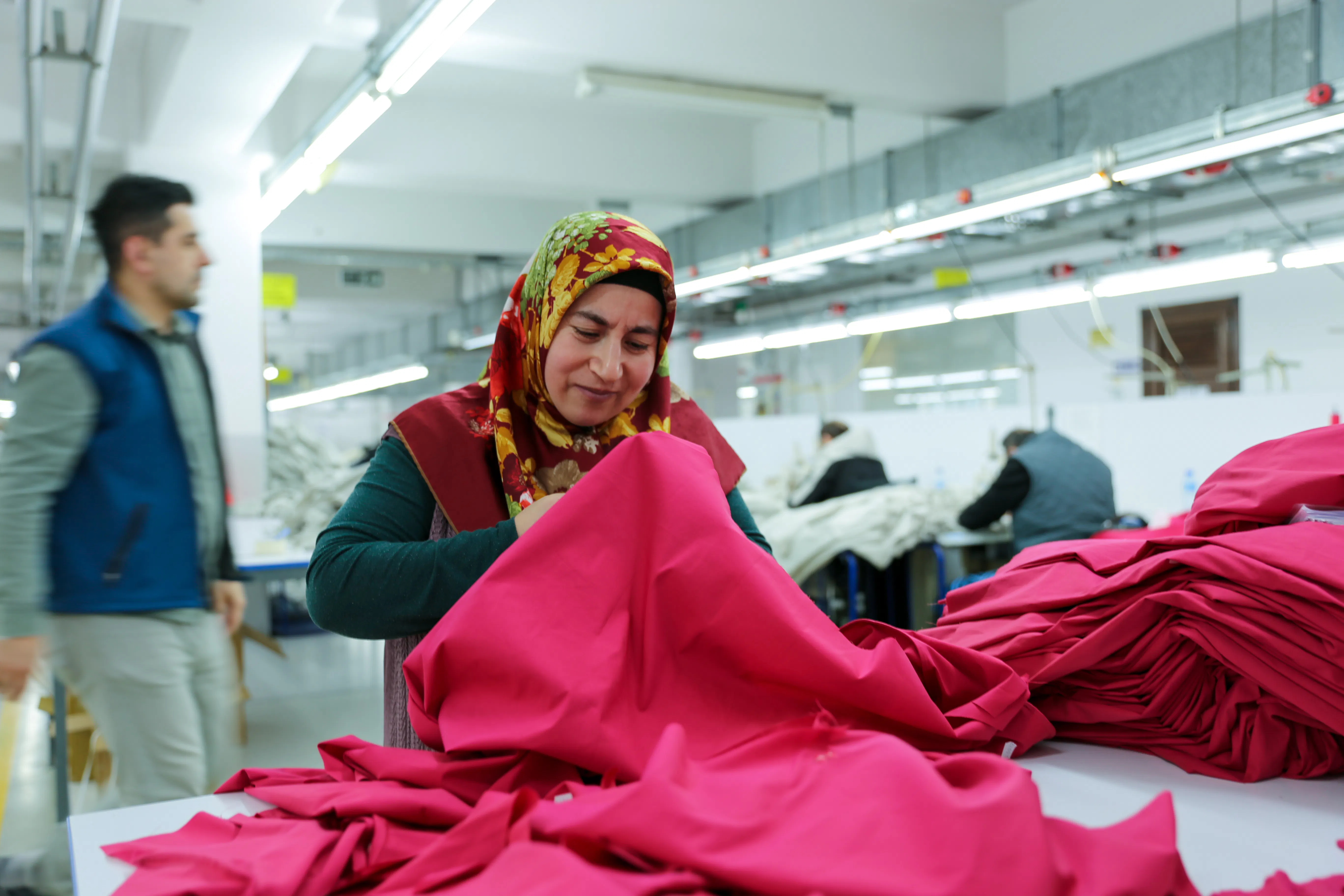
"text": "A collaboration with the Netherlands Enterprise Agency (RVO), Fair Wear member brands Kuyichi, Schijvens and Zeeman, and their Turkish suppliers — to strengthen due diligence on wages, purchasing practices and gender equality, especially addressing gender-based violence and harassment. The work connects gender responsiveness to living wages, excessive overtime, worker voice and responsible purchasing practices.",
"spans": [],
"direction": "ltr"
}
],
"card_cta_label": null,
"card_cta_link": {
"link_type": "Any"
}
},
{
"card_title": "GIZ: Localising violence and harassment prevention in Bangladesh",
"card_description": [
{
"type": "paragraph",
"text": "A partnership to strengthen local capacity to prevent and remediate gender-based violence and harassment in Bangladesh’s garment sector. The work focused on transferring Fair Wear’s Workplace Education Programme on Violence and Harassment to local organisations, supporting anti-harassment committees and advancing advocacy for safer workplaces. ",
"spans": [],
"direction": "ltr"
}
],
"card_cta_label": null,
"card_cta_link": {
"link_type": "Any"
}
},
{
"card_title": "STITCH Gender Working Group",
"card_description": [
{
"type": "paragraph",
"text": "A collaboration with STITCH partners to strengthen gender-responsive programming across civil society and sector initiatives. The work includes the Gender Marker Tool, which helps Fair Wear and other organisations assess whether gender is meaningfully integrated into programme design, implementation and learning. ",
"spans": [],
"direction": "ltr"
}
],
"card_cta_label": "Learn more",
"card_cta_link": {
"link_type": "Web",
"key": "a2cbc418-4d28-466c-bac8-4bc2e368a4e7",
"url": "https://www.stitchpartnership.org/resources-creating-an-enabling-environment#gendermarkertool",
"target": "_blank"
}
},
{
"card_title": "Gender Data Collaboration",
"card_description": [
{
"type": "paragraph",
"text": "A collaboration between Fair Wear, BSR, ETI, the Partnership for Sustainable Textiles and AGT to align practical guidance for brands on gender-disaggregated data collection. Building on BSR’s Gender Data and Impact Framework, the collaboration sets out tiered indicators to help brands and suppliers identify gendered risks, track progress and strengthen gender-responsive due diligence. ",
"spans": [],
"direction": "ltr"
}
],
"card_cta_label": null,
"card_cta_link": {
"link_type": "Any"
}
}
],
"show_highlighted_projects": true,
"highlighted_projects_label": "In focus",
"highlighted_projects_title": [
{
"type": "heading2",
"text": "Improving due diligence, wages and gender equity in the Turkish garment sector",
"spans": [],
"direction": "ltr"
}
],
"highlighted_projects_description": [
{
"type": "paragraph",
"text": "In partnership with the Netherlands Enterprise Agency (RVO), Fair Wear collaborated with brands Kuyichi, Schijvens and Zeeman and nine of their Turkish suppliers to address gender inequality, with a focus on gender-based violence and harassment in the workplace — leveraging responsible purchasing practices as a lever for change, even in times of hyperinflation. ",
"spans": [],
"direction": "ltr"
}
],
"highlighted_projects": [
{
"project_image": {
"dimensions": {
"width": 5472,
"height": 3648
},
"alt": null,
"copyright": null,
"url": "https://images.prismic.io/fair-wear/wQgXZQWXL1PCyH7x_IMG_9209.jpg?auto=format,compress",
"id": "wQgXZQWXL1PCyH7x",
"edit": {
"x": 0,
"y": 0,
"zoom": 1,
"background": "transparent"
}
},
"project_title": "For Fair Fashion: Improving due diligence, wages and gender equity in the Turkish garment sector",
"project_description": [
{
"type": "paragraph",
"text": "Project A formed the research foundation for this work. It drew on evidence from more than 300 workers across 18 factories, alongside input from 20 member brands and 18 suppliers. The research examined working conditions, wage levels and the extent to which brands and suppliers were meeting their human rights due diligence responsibilities on living wages and gender equality. The summary report is available here; full reports are also available on the worker interviews and on the brand and supplier research. ",
"spans": [],
"direction": "ltr"
},
{
"type": "paragraph",
"text": "",
"spans": [],
"direction": "ltr"
},
{
"type": "paragraph",
"text": "Project B translates the research into practical action. Running from June 2023 to February 2026, Fair Wear worked with three partner brands and suppliers in Türkiye to strengthen gender-responsive human rights due diligence, fair pricing and wage-setting, worker–management dialogue, and access to remedy. The project includes Türkiye risk scoping, modular assessments on issues such as violence and harassment and living wages, capacity building for brands and suppliers, improvements to grievance mechanisms, and multi-stakeholder learning so that tools and lessons could be replicated beyond the participating supply chains. ",
"spans": [],
"direction": "ltr"
}
],
"project_cta_label": "Read the summary report",
"project_cta_link": {
"link_type": "Web",
"key": "a2147b4e-753a-40b6-9540-3fcf46e81509",
"url": "https://api.fairwear.org/wp-content/uploads/2023/07/For-fair-fashion-Fair-Wear-research-summary-report.pdf"
}
}
],
"show_message": true,
"message_us_title": [],
"message_us_text": [],
"message_us_image": {},
"message_us_cta_label": null,
"message_us_link": {
"link_type": "Any"
},
"show_resources_section": true,
"resources_label": "Resources",
"resources_title": [
{
"type": "heading2",
"text": "Practical resources to support implementation",
"spans": [],
"direction": "ltr"
}
],
"resources_items": [
{
"resource_type": null,
"resource_title": "Gender equality policy",
"resource_description": [],
"resource_cta_label": "Access resource",
"resource_cta_link": {
"link_type": "Web",
"key": "7e4d8130-b4f6-4b10-9a1a-88663690e0fa",
"url": "https://fwf.my.site.com/website/resources?c__versionId=a4RAM00000002qK2AQ",
"target": "_blank"
}
}
],
"show_latest_stories": true,
"thought_leadership_label": "Related stories",
"thought_leadership_title": [
{
"type": "heading2",
"text": "Explore our news and stories on gender responsiveness",
"spans": [],
"direction": "ltr"
}
],
"thought_leadership_stories": [
{
"latest_stories_stories_item": {
"id": "aj1DmBEAACwAz95G",
"type": "stories",
"tags": [
"Gender responsiveness",
"Türkiye"
],
"lang": "en-us",
"slug": "addressing-gender-based-violence-through-purchasing-practices-lessons-from-turkiye",
"first_publication_date": "2026-06-25T15:30:09+0000",
"last_publication_date": "2026-07-31T09:12:48+0000",
"uid": "addressing-gender-based-violence-through-purchasing-practices-lessons-from-turkiye",
"data": {
"title": [
{
"type": "heading1",
"text": "Addressing gender-based violence through purchasing practices: lessons from Türkiye",
"spans": [],
"direction": "ltr"
}
],
"cover_image": {
"dimensions": {
"width": 5472,
"height": 3648
},
"alt": null,
"copyright": null,
"url": "https://images.prismic.io/fair-wear/aj1JVFbRV8_Qf4kv_IMG_9471-1.jpg?auto=format,compress",
"id": "aj1JVFbRV8_Qf4kv",
"edit": {
"x": 0,
"y": 0,
"zoom": 1,
"background": "transparent"
},
"Card": {
"dimensions": {
"width": 600,
"height": 400
},
"alt": null,
"copyright": null,
"url": "https://images.prismic.io/fair-wear/aj1JVFbRV8_Qf4kv_IMG_9471-1.jpg?auto=format,compress&rect=0,0,5472,3648&w=600&h=400",
"id": "aj1JVFbRV8_Qf4kv",
"edit": {
"x": 0,
"y": 0,
"zoom": 1,
"background": "transparent"
}
}
}
},
"link_type": "Document",
"key": "b0caf289-f4c2-4585-8e77-2e940ad02ae5",
"isBroken": false
}
}
],
"show_explore_further": true,
"explore_label": "Explore Further",
"explore_description": [
{
"type": "paragraph",
"text": "Learn more about other impact areas",
"spans": [],
"direction": "ltr"
}
],
"explore_cards": [
{
"card_title": "Equitable sourcing",
"card_description": [
{
"type": "paragraph",
"text": "Transforming sourcing to work for people and business",
"spans": [],
"direction": "ltr"
}
],
"card_cta_label": "Learn more",
"card_cta_link": {
"id": "ad0vLRAAACUAL_zH",
"type": "impact_area",
"tags": [
"Equitable sourcing"
],
"lang": "en-us",
"slug": "equitable-sourcing",
"first_publication_date": "2026-04-13T18:02:06+0000",
"last_publication_date": "2026-07-28T21:07:29+0000",
"uid": "equitable-sourcing",
"link_type": "Document",
"key": "078e0b83-587f-4a94-8cc9-7565390ccf44",
"isBroken": false
}
},
{
"card_title": "Meaningful stakeholder engagement",
"card_description": [
{
"type": "paragraph",
"text": "Centring workers’ voices to inform HRDD in real time",
"spans": [],
"direction": "ltr"
}
],
"card_cta_label": "Learn more",
"card_cta_link": {
"id": "ad0v8hAAACUAL_3v",
"type": "impact_area",
"tags": [
"Meaningful stakeholder engagement"
],
"lang": "en-us",
"slug": "meaningful-stakeholder-engagement",
"first_publication_date": "2026-04-13T18:04:14+0000",
"last_publication_date": "2026-07-28T21:09:40+0000",
"uid": "meaningful-stakeholder-engagement",
"link_type": "Document",
"key": "0f0b9fef-43a4-49d6-936f-41343621e6a7",
"isBroken": false
}
},
{
"card_title": "Access to remedy",
"card_description": [
{
"type": "paragraph",
"text": "From grievances to lasting change",
"spans": [],
"direction": "ltr"
}
],
"card_cta_label": "Learn more",
"card_cta_link": {
"id": "ad0wXxAAACUAL_62",
"type": "impact_area",
"tags": [
"Access to remedy "
],
"lang": "en-us",
"slug": "access-to-remedy",
"first_publication_date": "2026-04-13T18:05:43+0000",
"last_publication_date": "2026-07-28T21:15:46+0000",
"uid": "access-to-remedy",
"link_type": "Document",
"key": "d687afe7-7c4d-4d7d-a328-8da4289e394f",
"isBroken": false
}
}
],
"show_partner_section": true,
"partner_title": [
{
"type": "heading2",
"text": "Partner with us",
"spans": [],
"direction": "ltr"
}
],
"partner_description": [
{
"type": "paragraph",
"text": "Interested in working together to drive meaningful change? We’re always open to collaborations that strengthen impact and push the garment industry forward. ",
"spans": [],
"direction": "ltr"
}
],
"partner_image": {
"dimensions": {
"width": 3000,
"height": 1200
},
"alt": null,
"copyright": null,
"url": "https://images.prismic.io/fair-wear/WvUZ-HQdfbw4xxzv_PartnerWithUs-Banner-.png?auto=format,compress",
"id": "WvUZ-HQdfbw4xxzv",
"edit": {
"x": 0,
"y": 0,
"zoom": 1,
"background": "transparent"
}
},
"partner_cta_label": "Explore partnership opportunities",
"partner_cta_link": {
"id": "ad017hAAACUAMAi0",
"type": "template_forms",
"tags": [],
"lang": "en-us",
"slug": "partner-with-us",
"first_publication_date": "2026-04-13T18:29:30+0000",
"last_publication_date": "2026-07-28T11:15:21+0000",
"uid": "partnership-form",
"link_type": "Document",
"key": "7922e60e-5875-4efe-af55-676dbf28d434",
"isBroken": false
},
"meta_title": null,
"meta_description": null,
"og_image": {}
}
}